
The Institute
IRST "Dino Amadori" IRCCS is an internationally renowned oncology institute for care, research, and training. Discover who we are, our mission against oncological and onco-hematological diseases, our history, and our commitment to achieving excellence for our patients.
Who we are
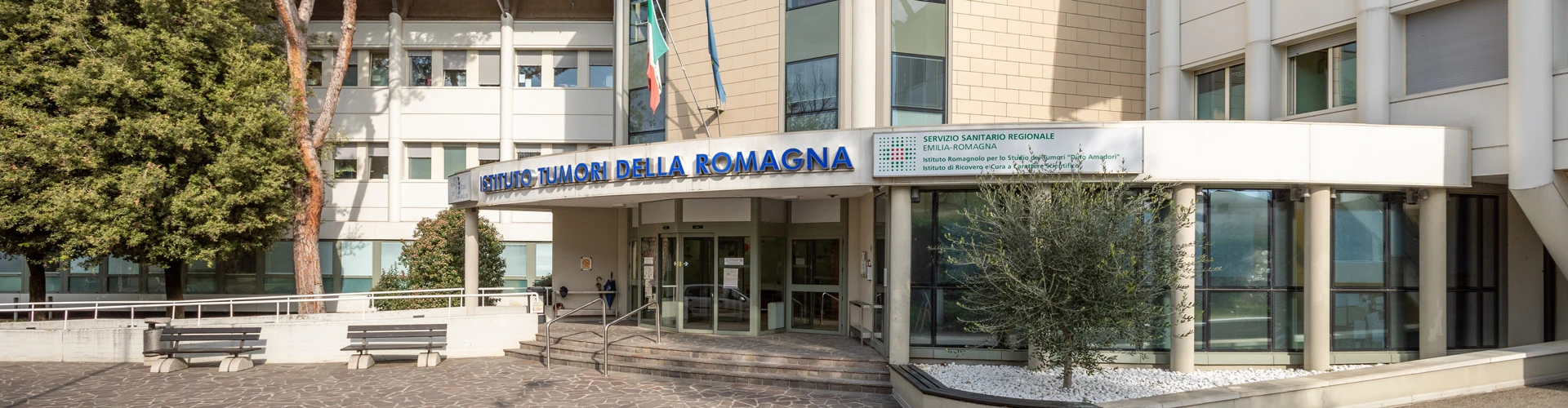
Istituto Romagnolo per lo Studio dei Tumori "Dino Amadori" – IRST Srl IRCCS is a national reference oncology institute dedicated to cancer care, oncology research, and specialist healthcare training. An integral part of the Emilia-Romagna Regional Health Service, IRST adopts a population-based organizational approach, in line with international best practice, to guarantee quality, accessible oncology care for all.
The IRST project originated from a public-private alliance among non-profit entities. It is structured as a limited liability company with prevalent public capital, governed by Italian Legislative Decree 175/16, and recognized as a Social Enterprise. In this capacity, the Institute reinvests any surplus into care, cancer research, and training, pursuing exclusively institutional aims.
Together with AUSL Romagna, IRST promotes the Comprehensive Cancer Care and Research Network (CCCRN), an integrated oncology network built on collaboration, proximity, and shared expertise. This model draws on the experience of individual centers across Romagna, giving patients access to advanced oncology treatment close to home.
Active since 2007 at its main site in Meldola (FC), within the former civil hospital, IRST also operates at the "Morgagni-Pierantoni" Hospital in Forlì, the "Bufalini" Hospital in Cesena, and the "Santa Maria delle Croci" Hospital in Ravenna (Radiotherapy and Skin Cancer Unit). The Institute is recognized by the Italian Ministry of Health as a Istituto di ricovero e cura a carattere scientifico - IRCCS (Scientific Hospitalization and Care Institute) in "Advanced therapies in medical oncology" (Ministerial Decree of 8 March 2012 and subsequent renewals), placing it among Italy's leading centers of oncology excellence.
IRST's organization is defined by its Statute and governed by its Corporate Charter (Atto aziendale), the founding document of the Institute's organizational structure and chart. As the hub of the Romagna Oncology Network, IRST coordinates clinical research, oncology trials, and scientific governance, strengthening the link between therapeutic innovation and patient care.
Mission
Istituto Romagnolo per lo Studio dei Tumori "Dino Amadori" aims to strengthen the integration between oncology care and translational research, promoting innovative cancer therapies and accelerating the transfer of laboratory findings into clinical practice. Excellence, sustainability, and patient-centered care guide everything the Institute does.
Vision
IRST was founded on a strong conviction: the fight against cancer can be won. Progress in cancer prevention, increasingly effective treatments, and the steady contribution of research show that new hope is possible. The Institute is committed to leading this challenge by developing innovative models of precision oncology and multidisciplinary care.
Values
IRST places every person at the center, ensuring respect, safety, and humanized care. All activities are inspired by the principles of Italy's National Health Service: universality, equity, appropriateness, participation, transparency, continuity of care, efficiency, and quality — reflecting a commitment to comprehensive, evidence-based, innovation-driven oncology care.
Our history
1979 — The founding of IOR
Prof. Dino Amadori founds the Istituto Oncologico Romagnolo (IOR), a voluntary organization integrating public healthcare activities in research, prevention, and care, working closely with the oncology departments of the local health authorities.
- 1990s — The IRST project takes shape. Following Italian healthcare reform (Legislative Decrees 502/92 and 229/99), Bocconi University in Milan drafts the founding project for the Istituto Scientifico Romagnolo per lo Studio e la Cura dei Tumori. It is approved by Romagna's local health authorities in 1997.
- 15 July 2000 — IRST Srl is established, following authorization from the State-Regions Conference and the Emilia-Romagna Region.
- 6 October 2003 — Cornerstone laid for the renovation of Meldola's former civil hospital.
- 24 October 2005 — The Network Plan is approved by the founding health authorities.
- 29 November 2006 — The Medical Directorate and the Biomolecular and Translational Research Laboratory become operational.
- October 2007 — Care, diagnostic, and research activities begin.
- 1 January 2011 — IRST takes over the Oncology-Hematology Day Hospital at Cesena's "Bufalini" Hospital; on 27 June, a new wing housing Diagnostic Nuclear Medicine and the Radiopharmacy is inaugurated.
- 13 April 2012 — Official IRCCS recognition is published in the Italian Official Gazette; AIFA authorizes GMP Cell Factory activity on 27 April.
- 2013 — AUSL della Romagna is formed by merging four local health authorities; the Emilia-Romagna Region becomes majority shareholder of IRST Srl.
- 1 January 2014 — IRST takes over management of Radiotherapy at Ravenna's "Santa Maria delle Croci" Hospital. 2015 — The Intercompany Program (IRST IRCCS – AUSL Romagna) is established; Fondazione Cassa di Risparmio di Imola joins the shareholder base on 8 June.
- 16 May 2016 — The "Casa Accoglienza San Giuseppe – Antonio Branca" patient guesthouse is inaugurated.
- 10 April 2018 — The University of Bologna joins IRST's shareholder base.
- 16 April 2018 — Italian President Sergio Mattarella visits IRST; Emilia-Romagna Region President Stefano Bonaccini lays the cornerstone for the future unified IRST-AUSL Romagna Oncology Pharmacy.
- 23 February 2020 — Prof. Dino Amadori, founder of IRST and of the earlier Istituto Oncologico Romagnolo, passes away suddenly, leaving an enormous void.
- 12 October 2020 — The Shareholders' Assembly approves renaming the Institute "Istituto Romagnolo per lo Studio dei Tumori 'Dino Amadori' – IRST S.r.l." in his honor.
- 21 December 2020 — The three-year plan for Romagna's Comprehensive Cancer Care (& Research) Network (CCCRN) is approved.
- 4 January 2024 — IRST's Cell Factory is authorized by AIFA — the first in Emilia-Romagna — to produce genetically modified T lymphocytes (CAR-T therapies).
Organizational model
IRST's structure reflects its integrated mission: Care, coordinated through its clinical departments, brings together medical oncology, radiotherapy, nuclear medicine, hematology, and the full spectrum of diagnostic and therapeutic services across the Institute's four sites. Research, coordinated by the Scientific Directorate and the Innovation and Research Program, spans translational and clinical research, biostatistics, advanced therapies, and technology transfer, working in constant dialogue with clinical practice. Administrative and organizational functions, under General Management and the Medical Directorate, ensure the governance, quality, and resources needed to support both care and research activities. This tripartite model — Care, Research, and Administration working in close coordination — is what allows IRST to translate scientific advances into concrete benefit for patients.
Where we are
IRST "Dino Amadori" IRCCS operates across four sites, forming an integrated oncology network for high-quality diagnosis, care, and research:
- Meldola (FC) — main and legal headquarters, at the former civil hospital, Via Piero Maroncelli 40
- Forlì — at the "Morgagni-Pierantoni" Hospital
- Cesena — at the "Bufalini" Hospital (Oncology-Hematology Day Hospital)
- Ravenna — at the "Santa Maria delle Croci" Hospital (Radiotherapy and Skin Cancer Unit)
Accreditations and certifications
IRST's certifications and accreditations reflect the Institute's ongoing commitment to the highest standards of quality and reliability in oncology care and scientific research, overseen by the Quality, Accreditation, Certification and Organizational Development Office.
- Institutional accreditation — IRST is accredited by the Emilia-Romagna Region to provide services on behalf of Italy's National Health Service, and since 2023 has also been accredited as a regional CME (Continuing Medical Education) Provider.
- UNI EN ISO 9001:2015 — covering outpatient, day-service, day-hospital, and inpatient oncology care; epidemiological, preclinical, translational (including the Biological Resource Center), clinical, and organizational research; the Pharmacy Unit; the CRO; and the design and delivery of healthcare training courses.
- ESMO — "Designated Center of Integrated Oncology and Palliative Care" (current accreditation period: 2025–2027).
- JACIE accreditation (CNT/CNS certification) — as part of the Romagna Metropolitan Transplant Program (IRST IRCCS and AUSL Romagna), covering autologous hematopoietic stem cell transplantation for hemato-oncological cancers, accredited to JACIE (Joint Accreditation Committee of ISCT and EBMT) standards.
- High Technology Network — the Bioscience Laboratory is accredited to the Emilia-Romagna High Technology Network (no. 93L) for the "Life Sciences" industrial research platform.
- AGCM legality rating — IRST is listed among companies with a legality rating from the Italian Competition Authority (AGCM).
- European Reference Network (ERN) — IRST is a recognized European reference center for rare cancers within ERN EURACAN.
- Phase I trials — IRST is listed among AIFA's self-certified Phase I Units, meeting the requirements of AIFA Determination No. 809/2015.
- Legislative Decree 231/01 and Law 190/2012 — the Board of Directors has adopted an Organization, Management and Control Model (MOG 231) and a three-year anti-corruption and transparency plan, overseen by a dedicated Supervisory Board.
- ISO 15189:2024 accreditation — obtained in 2025 by the Advanced and Predictive Molecular Diagnostics Unit.
Last update: 21 August 2026, 15:16