

Platforms and Facilities
IRST's platforms and facilities combine research, technology, and innovation to develop advanced cancer diagnostics and therapies. Laboratories, biobanks, and licensed manufacturing units that turn science into care.
IRST "Dino Amadori" IRCCS's platforms and facilities combine research, technology, and innovation to develop advanced cancer diagnostics and therapies. Laboratories, biobanks, and licensed manufacturing units that turn science into care.
Bioscience Laboratory
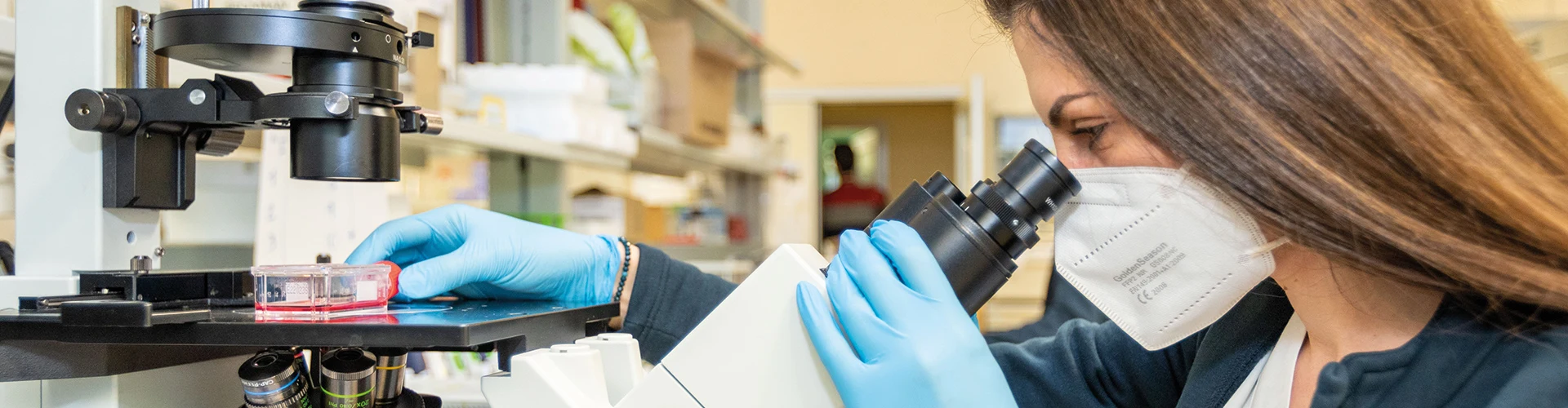
The Bioscience Laboratory (SC Laboratorio di Bioscienze), directed by Dr. Paola Ulivi, is the operational heart of IRST's translational research and advanced molecular diagnostics. Spanning approximately 500 square meters, it is organized into two macro-areas — Advanced and Predictive Diagnostics and Research — and is equipped with next-generation sequencers, biomarker identification platforms, circulating tumor cell analysis tools, confocal microscopy for deep imaging, and a dedicated zebrafish facility. The Research area is structured into four units — Preclinic and Osteoncology, Translational Hematology, Translational Oncology, and the Animal Facility — each developing projects across IRST's four institutional research lines, with a strongly translational approach that integrates clinical and laboratory expertise. Through its membership in the Emilia-Romagna High Technology Network, the Laboratory also supports local and external businesses on innovation, prototyping, and experimental validation projects.
-
-
-
-
Advanced Molecular Diagnostics
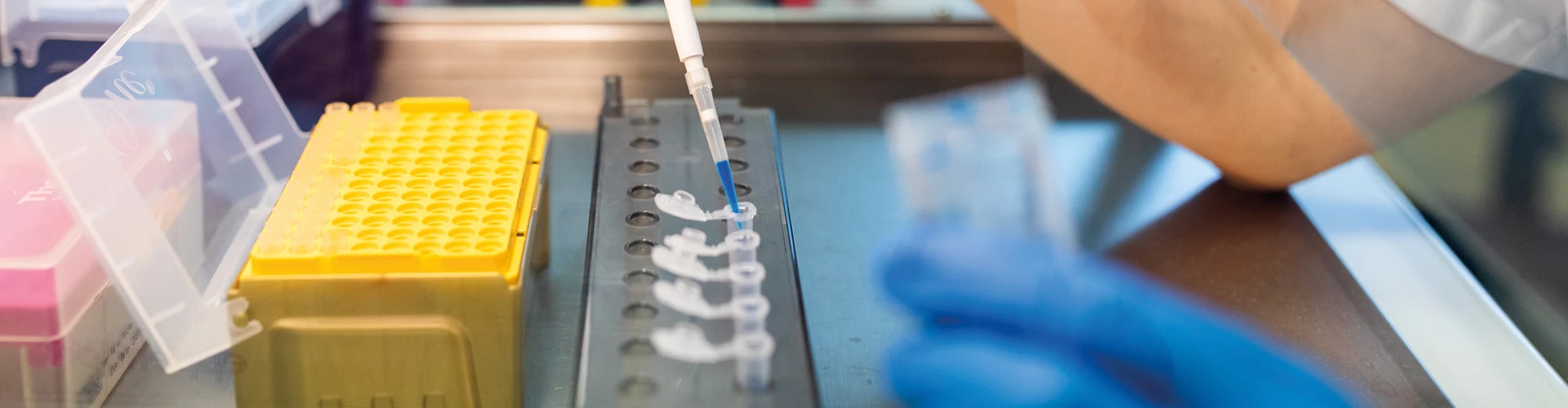
The Advanced and Predictive Molecular Diagnostics Unit, part of the Bioscience Laboratory, studies the molecular alterations underlying cancer and hereditary predisposition, playing a decisive role in diagnosis, personalized therapy selection, and treatment monitoring. Through DNA, RNA, and protein analysis — using Next Generation Sequencing (NGS) and Real-Time PCR on tumor tissue, peripheral blood, liquid biopsy, and other biological samples — the Unit identifies diagnostic, prognostic, and predictive biomarkers, including markers of drug toxicity and metabolism. Activity is closely integrated with clinical practice and with AUSL Romagna's Pathology department, and contributes to regional and national personalized medicine programs and clinical trials. The Unit operates under UNI EN ISO 9001:2015 and UNI EN ISO 15189:2024, with tests accredited by Accredia (accreditation no. 02289), and undergoes regular internal and external quality controls (VEQ/EMQN, ISS) and Accredia surveillance audits.
Contract Research Organisation (CRO)

IRST's CRO, led by Dr. Oriana Nanni within the Innovation and Research Program IRCCS IRST – AUSL Romagna, supports every phase of oncology and onco-hematology clinical research in full compliance with Good Clinical Practice (GCP), certified under Italian Ministerial Decree of 15 November 2011. Services span the entire trial life cycle: site qualification and selection; TMF/eTMF management and regulatory consulting; protocol drafting, ethics and competent-authority submissions (OsSC, RSO, CTIS, ClinicalTrials.gov), and amendment management; project management, including CTMS-based coordination and recruitment strategy; pharmacovigilance and safety reporting (SAE/SUSAR/AESI, EudraVigilance, Annual Safety Reports); risk-based monitoring; clinical data management (DMP, eCRF design, centralized monitoring, data cleaning); biostatistics (study design, sample size, randomization, statistical analysis plans, Clinical Study Reports); and quality assurance, including GCP audits and CAPA management. The CRO covers interventional (pharmacological and non-pharmacological), observational, translational/biological, and medical device/IVD studies, and traces its roots to IRST's Biostatistics and Clinical Trials Unit, established in 2007.
Immuno Gene Therapy Factory (IGTF)
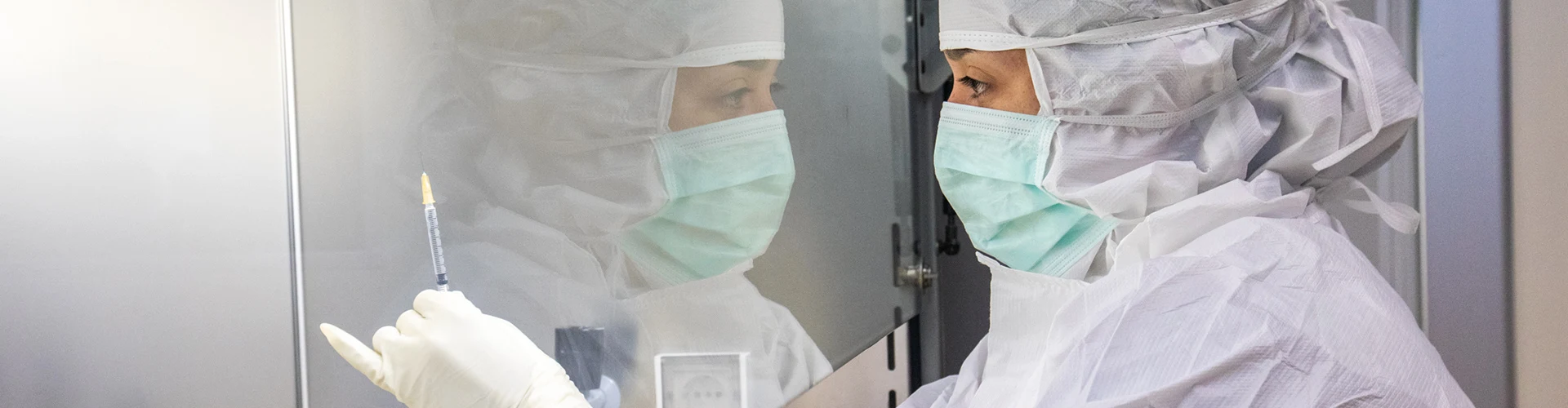
The IGTF, an AIFA-authorized manufacturing facility established in 2012 and part of the Advanced Cellular Therapies and Rare Tumors Unit, develops and produces cellular and gene therapies for cancer patients. It comprises two structurally separate GMP-compliant factories: Factory 1, producing autologous dendritic-cell cancer vaccines, and Factory 2, producing anti-CD19 CAR T cells for hematological malignancies. Three authorized clinical trials are currently active — COREVAX (metastatic colorectal cancer), Combi G Vax (glioblastoma), and RaC-Ad (rare tumors including head and neck, neuroendocrine tumors, and soft tissue sarcomas). The facility's cleanrooms and associated platforms (IMAV, Adoptive CAR T Cell Platform, CLEM) support the full ATMP production, analysis, and monitoring cycle, backed by a dedicated Quality Control laboratory (flow cytometry, identity testing, microbiology) and automated systems including the CliniMACS Prodigy®. IGTF is a member of the NOTA (Network Officine Terapie Avanzate) and ASCCA scientific associations, takes part in the national PNC-LSH TA program, and co-leads the Advanced Therapies section of the European JANE-2 project.
Biological Resource Center (CRB)
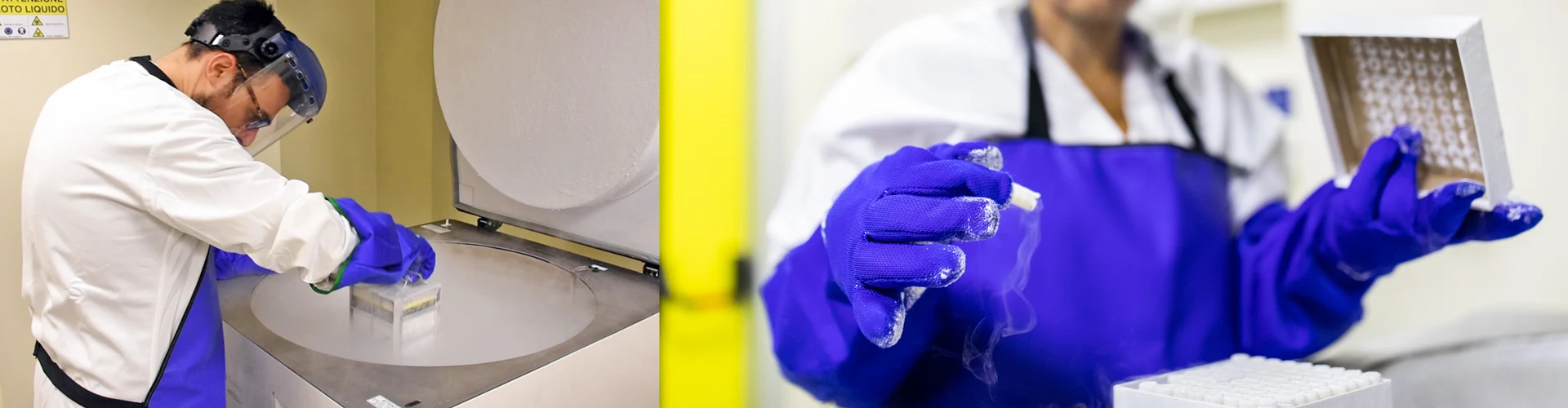
The CRB, IRST's certified oncology biobank, part of the Advanced Cellular Therapies and Rare Tumors Unit and directed by Dr. Valentina Ancarani, collects, processes, stores, and distributes human biological material — tumor and healthy tissue, whole blood, plasma, serum, peripheral blood mononuclear cells (PBMC), and urine — for oncology and translational research, always under informed consent and anonymized clinical data. Spanning 220 square meters, the CRB includes a dedicated blood-sample processing laboratory and a cryobiology storage room, protected by controlled access, video surveillance, continuous equipment monitoring, and a Disaster Recovery Plan. It is an active member of the European and national BBMRI-ERIC network and works daily with AUSL Romagna's oncologists, pathologists, and surgeons under a hub-and-spoke regional model. Access to samples follows a structured procedure requiring approval from both IRST's Scientific-Medical Committee (CMS) and the Romagna Ethics Committee (CEROM), formalized through a Material Transfer Agreement (MTA).
Radiopharmacy Unit
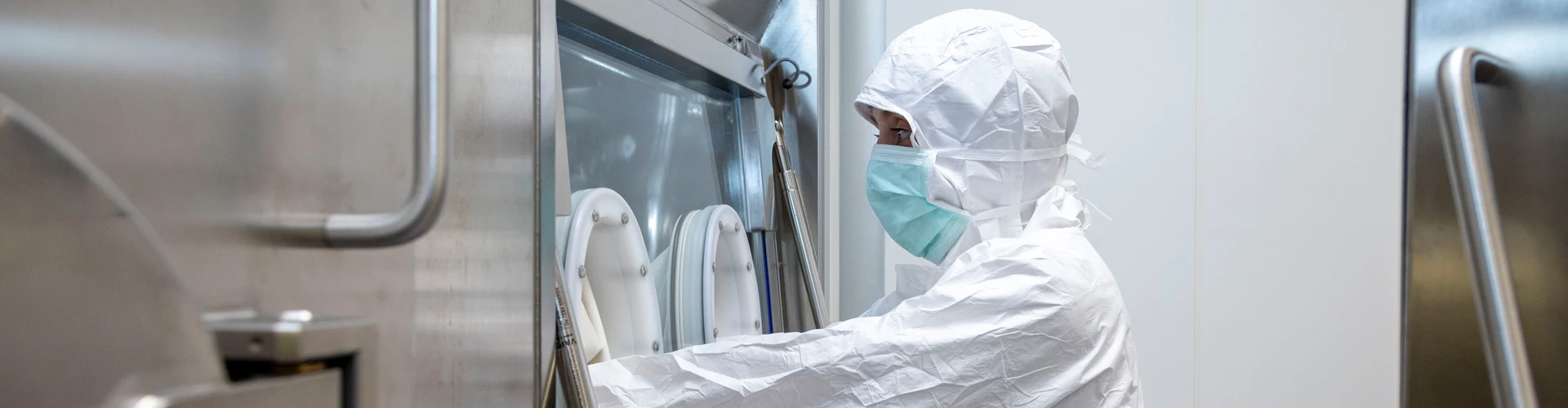
The Radiopharmacy Unit prepares, manages, and quality-controls radiopharmaceuticals for diagnostic and therapeutic Nuclear Medicine, in compliance with Good Manufacturing Practice (GMP), Good Clinical Practice (GCP), and Italian standards for radiopharmaceutical preparation (NBP MN). Its Radiopharmaceutical Therapy Factory (RTF), based at IRST's oncology pharmacy building, is authorized by the Italian Medicines Agency (AIFA) for the GMP production of experimental therapeutic radiopharmaceuticals under EU Regulation 536/2014. Equipped with shielded manipulation lines (class C rooms and class A isolators), automated synthesis modules, automated dispensing systems, and analytical instrumentation (HPLC, radio-chromatographs), the facility is a national reference platform for Lutetium-177 (Lu-177)-based theranostic radioligand therapy (RLT), including third-party production for multicenter clinical trials and European projects. The Unit is active in national and international scientific networks (AFI, SIFACT, SIFO, GICR, AIMN, EANM) and serves as a training site for pharmacy degree and specialization programs, including the European RLT Academy.
Last update: 25 August 2026, 14:02